HVAC Maintenance Plans 2026: How to Price Them for Real Profit (Not Just to Win the Customer)

By Tammy Hoang, QuickBooks ProAdvisor — Construction Bookkeeping Specialist | Construction Cost Accounting
(949) 889-3283 | constructioncostaccounting.com

Ask most HVAC contractors why they offer a maintenance plan, and the answer is some version of 'to keep customers and get the repair work.' That's a good instinct — an HVAC maintenance agreement is one of the most valuable things you can build. But here's the problem: most owners price their plans to win the customer, not to make a profit, and they never track what the plan actually costs to deliver. So they end up with a base of maintenance customers and no idea whether those plans pay for themselves or quietly run at a loss.
This is the 2026 owner's guide to pricing an HVAC maintenance plan for real profit — written for HVAC contractor owners, not accountants. We'll cover what a maintenance plan actually costs to deliver (the part most owners underestimate), how to price it so it makes money on its own, why HVAC recurring revenue is worth building, and how good HVAC bookkeeping tells you whether your plan base is genuinely profitable. This builds on our HVAC bookkeeping guide → [link to: /post/hvac-contractor-bookkeeping-2026-guide], which covered separating install, service, and maintenance.
If you've got a stack of maintenance agreements and can't say with confidence whether they make money, this guide is for you. As a construction bookkeeper team that handles bookkeeping for HVAC contractors, our goal is to help you price and track plans so the most valuable part of your business is actually profitable — on purpose.
Why Maintenance Plans Are Worth Building
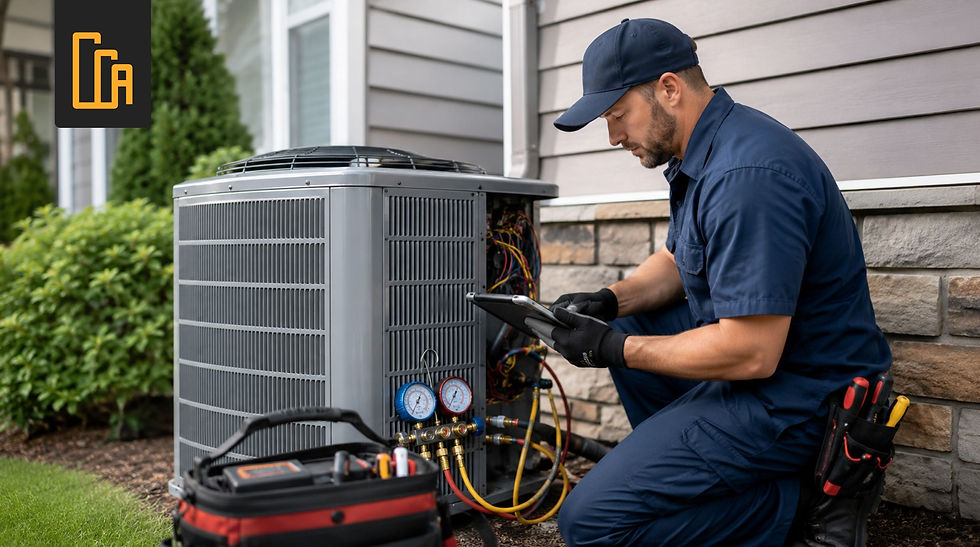
Before we get to pricing, it's worth being clear on why an HVAC service agreement is worth the effort in the first place. A maintenance plan isn't just a tune-up you sell — it's recurring, predictable revenue and a customer relationship that pays off in three ways:
Predictable revenue — plan income comes in on a schedule, smoothing the seasonal swings every HVAC contractor knows
A pipeline for repairs and replacements — plan customers call you first, and you're in their system when the unit needs work or replacement
Business value — a base of HVAC recurring revenue makes your company more stable and more valuable if you ever sell. A well-run HVAC service agreement program is a real asset on the books.
That's why building HVAC recurring revenue through maintenance plans is one of the smartest moves an HVAC owner can make. But all of that upside depends on one thing: the plan itself has to be priced right. A plan base that loses money on every agreement isn't an asset — it's a liability you're calling an asset. Getting the pricing right is what turns a maintenance plan from a hopeful loss-leader into a genuine profit center.
FROM THE OWNER'S CHAIR: We've had HVAC clients with hundreds of maintenance agreements who were thrilled about their 'recurring revenue' — until we tracked the real cost to serve those plans and found the base was barely breaking even. The plans were doing their job as a repair pipeline, but the owner thought the plans themselves were profitable. They weren't. Knowing the difference changes how you price and grow them. |
What a Maintenance Plan Actually Costs to Deliver
Here's where most HVAC maintenance plan pricing goes wrong: owners price off the tune-up labor and forget everything else. The real cost to deliver a plan — the cost-to-serve — has several layers, and missing them is how a plan that looks profitable actually loses money:
THE REAL COST-TO-SERVE OF A MAINTENANCE PLAN
The plan price is the easy part. These are the costs most owners forget when they set it.
Tune-up labor | The tech hours for each scheduled visit (often two visits a year — spring and fall). |
Parts & filters | Filters, and any consumables included in the plan, at your real cost. |
Travel & drive time | Getting the tech to the property — real cost that's easy to forget. |
Scheduling & admin | Office time to schedule visits, send reminders, and manage the plan. |
Priority service cost | If the plan promises priority/discounted repairs, that's a cost too. |
Source: Construction Cost Accounting | constructioncostaccounting.com
Add these up and you have your real cost-to-serve. The plan only makes money if the price clears all five — not just the tune-up labor.
Add all five layers together and you have your true cost-to-serve per plan. Only then can you price an HVAC maintenance contract that actually makes money. If you've been setting your plan price by looking at what the competition charges, or by guessing what customers will pay, you're flying blind — you might be above your cost-to-serve, or well below it, and you'd have no way to know. Good HVAC accounting starts by making the real cost visible.
⚠ RED FLAG: The most commonly forgotten cost is drive time and scheduling. The tune-up itself might be 45 minutes, but getting the tech there, the windshield time, and the office work to schedule and remind the customer can easily double the real cost of the visit. Price off the 45 minutes alone and you've underpriced the plan before you started. |
Not Sure If Your Maintenance Plans Actually Make Money?
Most HVAC contractors price maintenance plans to win the customer, then never track whether the plans pay for themselves. CCA sets up HVAC accounting that tracks the real cost-to-serve on your maintenance base, so you know your true plan margin. In a 30-minute call, we'll review how your books handle maintenance-plan profitability today.
Call or Text: (949) 889-3283
Pricing the Plan: Win the Customer AND Make Money

Once you know your cost-to-serve, pricing becomes a real decision instead of a guess. The principle is simple: your plan price should clear the full cost-to-serve plus a genuine margin. Anything less means you're paying customers to be on your plan — which can be a deliberate strategy, but only if you can see it and choose it on purpose.
PRICED TO WIN vs PRICED TO PROFIT
Same plan, two very different outcomes — and only one shows up in your books
✗ PRICED ONLY TO WIN | ✓ PRICED TO PROFIT |
Set the price low to land the customer, hoping to make it back on future repairs. Maybe it works, maybe it doesn't — but you can't tell, because cost-to-serve was never tracked. The plan base could be running at a loss and you'd never know. | Set the price to clear the full cost-to-serve plus a real margin, then track plan profitability. The plan pays for itself on its own, and any repair and replacement work it generates is pure upside. You can prove the base is profitable. |
Source: Construction Cost Accounting | constructioncostaccounting.com
Winning the customer with a low price can still be a smart strategy — but only if you can SEE the real margin and choose it on purpose, not by accident.
Notice the difference. Pricing only to win means hoping the repair work makes up for a thin or negative plan margin — and never really knowing. Pricing to profit means the HVAC maintenance contract pays for itself, and the repairs and replacements it generates are pure upside. Both can be valid strategies. The difference is whether you can see the margin and choose deliberately. That visibility comes from tracking the plan's revenue against its real cost-to-serve in your books — the heart of HVAC contractor bookkeeping done right.
One quick note on the accounting side: when a customer pays upfront for a year of maintenance, that money is earned over the life of the agreement, not the day it lands. Recognizing it properly across the year keeps your monthly numbers honest. That's a revenue-recognition topic in its own right — for the mechanics of how that works under the accounting rules, see our ASC 606 guide → [link to: /post/asc-606-for-contractors-revenue-recognition-guide]. For this article, the point is simpler: price the plan to profit, and track it.
OWNER'S TAKEAWAY: A practical pricing rule: build your plan price from the bottom up — total your real cost-to-serve, add the margin you want, and that's your floor. Then check it against the market. If the market won't bear a profitable price, that tells you something important: either find efficiencies in how you deliver the plan, or treat it openly as a loss-leader for repair work — with eyes open, not by accident. |
Tracking Whether Your Plan Base Is Profitable
Pricing one plan right is the start. The bigger win is tracking your whole HVAC maintenance agreement base over time, so you always know whether your recurring revenue is genuinely profitable. With your plans set up properly in your books, a few numbers tell the whole story:
Plan revenue vs. cost-to-serve — the real margin on your maintenance base, not just the top-line plan revenue
Number of active plans — how many agreements are in force, and whether the base is growing
Average plan margin — whether your plans are priced to profit on average, or dragging
Repair & replacement revenue from plan customers — the upside the plans generate, tracked separately so you can see the full picture. This is where HVAC contractor bookkeeping earns its keep.
Together these tell you not just whether your plans make money on their own, but whether the whole strategy — plan plus the work it generates — is paying off. That's the full value of HVAC recurring revenue, and you can only manage it if your books separate and track it. Without that, you've got a stack of agreements and a hopeful feeling. With it, you've got a measurable, growable profit center.
A maintenance plan you can't measure is a guess with a contract attached. Price it to profit, track it against real cost-to-serve, and your recurring revenue becomes the most valuable, most predictable part of your business. |
Where Construction Cost Accounting Fits In For You

Construction Cost Accounting provides construction bookkeeping services built for HVAC contractors — including the maintenance-plan tracking most generalist bookkeepers never set up. We're a QuickBooks ProAdvisor practice, and here's what HVAC owners get from us on the maintenance-plan side:
Cost-to-serve tracking — the real cost of delivering your plans, so you can price them to profit
Plan profitability by the numbers — plan revenue vs. cost-to-serve, so you know your true maintenance margin
Recurring revenue recognized right — upfront plan payments earned across the year, so your monthly numbers stay honest
Plan-base reporting — active plans, average margin, and the repair revenue your plans generate
A clear picture of your most valuable asset — so you can grow your recurring base on purpose
A construction bookkeeper who knows HVAC — trade-specific bookkeeping for HVAC contractors, not a generalist guessing at plan costs
Most HVAC contractors we onboard see clean maintenance-plan tracking within 30 days. Our construction bookkeeper team sets up the cost-to-serve tracking and runs the monthly work, so you always know whether your plans pay off. You keep selling and servicing; your books tell you whether your recurring base is genuinely profitable. Our bookkeeping for contractors and construction accounting are built for the trades, so solid HVAC accounting turns your maintenance plans from a hopeful loss-leader into a measured profit center.
Want to Know What Your Maintenance Base Is Really Worth?
CCA builds HVAC accounting that prices and tracks maintenance plans for real profit — cost-to-serve, plan margin, and what your recurring base is worth. You stop guessing whether your plans pay off and start growing the most valuable part of your business on purpose. Most HVAC contractors we onboard see clean maintenance-plan tracking within 30 days.
Call or Text: (949) 889-3283
In 2026, the HVAC contractors who win with maintenance plans aren't the ones with the most agreements — they're the ones who know their plans make money. An HVAC maintenance agreement priced only to win the customer, with no tracking of cost-to-serve, can quietly run your recurring base at a loss. Priced to profit and tracked properly, the same plan becomes predictable income plus a pipeline of repair and replacement work.
The owners who get this right share one habit: they know their real cost-to-serve, they price plans to clear it with margin, and they track plan profitability over time. The owners who struggle price to win, never track the cost, and hope the repairs make up the difference. The difference isn't the plans — it's the HVAC bookkeeping behind them. Strong bookkeeping for contractors in the trades makes that visibility possible.
Construction Cost Accounting builds HVAC accounting and construction accounting that show you whether your maintenance plans actually make money — cost-to-serve, plan margin, and what your recurring base is worth. Our construction bookkeeping services are built for the trades, and our team knows HVAC. For the foundation of separating install, service, and maintenance, see our HVAC bookkeeping guide. For how upfront plan revenue is recognized under the accounting rules, see our ASC 606 guide. And for our full construction bookkeeping service.



Comments